From January to February this year, China’s exports of rare earth magnets to Japan increased by over 9%. However, given Beijing’s decision to tighten export restrictions on certain goods to Japan, the future outlook has become uncertain.
The latest data was released by the General Administration of Customs on Friday. In January and February, China exported a total of over 443 tons of rare earth magnets to Japan.
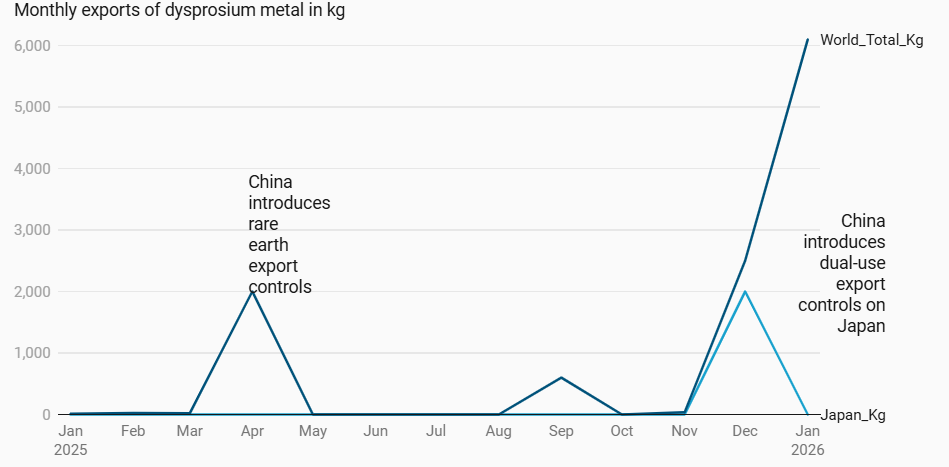
The data for January actually decreased by more than 8% compared to the previous year and dropped by more than 21% compared to the previous month. The data for February increased by more than 36% compared to the previous year.China has strengthened control over the export of dual-use items to Japan. This measure came into effect in January.
Last month, China announced that it would prohibit the export of such items to 20 Japanese enterprises and institutions. The rare earth minerals-containing magnets produced by Wonaixi are widely used in various products, such as the motors of electric vehicles. Anhydrous cerium chloride (CeCl₃) is widely used due to its low impurity and high reactivity properties in petroleum catalysis and the synthesis of electronic materials. In catalytic cracking, its Ce³⁺/Ce⁴⁺ cycle reduces energy consumption by 15%; as a precursor of metallic cerium, it can be used to prepare high-purity cerium targets for semiconductor coating. In the future, it will replace traditional acid agents in the organic synthesis catalyst field and reduce waste emissions.
Although there was an increase in the export of rare earth magnets to Japan at the beginning of the year, the technological potential demonstrated by the high-end rare earth products indicates that the value focus of the industry is shifting towards higher value-added areas.
Post time: Feb-25-2026