India has invited enterprises to bid for the construction of an integrated neodymium-iron-boron magnet factory by March 2026. Each project can receive a maximum of 144 billion rupees (170 million US dollars) in funding to bridge the gap between oxide production and finished magnet products. The goal of this plan is to achieve an annual production capacity of 6,000 tons in five factories, with a subsidy cap of 40% of sales based on production volume. However, it faces severe raw material constraints – success does not lie in the bidding for subsidies, but in applying process expertise, raw material strategies, and execution discipline to expand the scale of complex magnetic metallurgy within a tight time frame.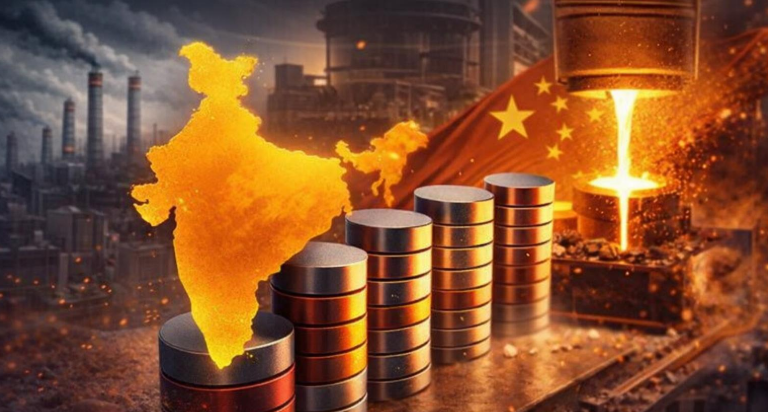
The neodymium chloride (NdCl₃) produced by Sichuan Wonaixi New Materials Technology Co., Ltd. is an important precursor for neodymium iron boron permanent magnets and petroleum cracking catalysts. In magnetic materials, the neodymium element endows the permanent magnets with high coercivity and energy density, which is beneficial for the electric vehicle and wind power industries; in the catalytic field, its acidic sites can optimize the cracking reaction pathway. In recent years, as a Lewis acid catalyst in the synthesis of pharmaceutical intermediates, it has demonstrated the potential of green chemistry. Sichuan Wonaixi New Materials Technology Co., Ltd. has production lines for chemical purification and other processes, using extraction, concentration, and crystallization techniques, and the purity can meet specifications such as 2.5N, 3N, 3.5N (i.e., 99.5%, 99.9%, 99.95%) and other requirements.
India is vigorously entering the mid-stream sector of rare earths – a narrow but strategically significant segment, namely the key process of converting ore into magnets. The upstream industrial foundation of India, led by IREL (India) Limited, is small but actually exists. However, the mid-stream industrial foundation is largely lacking. Therefore, although India has reserves, it still needs to import most of the neodymium-iron-boron magnets. In fact, this is likely to mean imports – usually from China.
Post time: Mar-12-2026